Overview
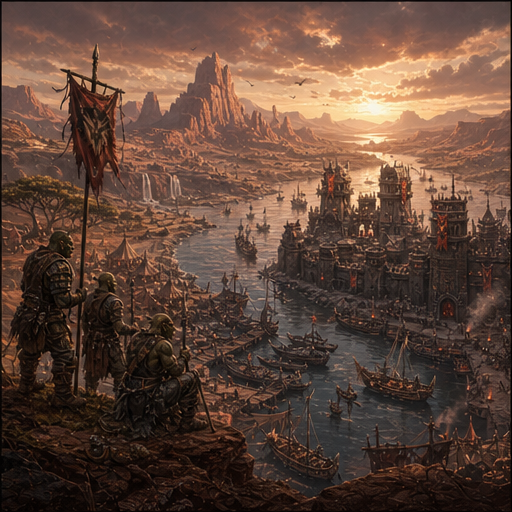
Savage, swift and brutal, it is often the image from the Southern Hordelands that people think of when they think of rampaging Orcs. Masters of both the horse and the long-boat, the Horde delight in attacking, looting and pillaging from all of their neighbours. Whether it be an army or a small raiding party, the results are nearly always violent and without mercy.
History
The Orcs of the South were for generations little more than small tribes of horsemen, content to fight anything they came into contact with, but too small to pose a real threat to their neighbours. But when the seven tribes, united by Krunsh Skullsplitter, attacked and captured Port Kheldar all that changed. Now they control a sizeable empire, encompassing both humans and gnomes, and have strong relations with the North, such that many people just refer to this whole area as the hordelands.
They are most famous for their participation in all three of the Horde attacks into their western neighbours. The first Horde attack was 80 years ago, and the most successful, defeating Ice-Wind Loch and the Bloodlands, before spilling across the northern part of the Korellian Plains and destroying every city they came across, up to and including the site of what is now Davin. They razed the city where Mari-Kye now stands before the horde broke up. The North forces lost the will to fight and wanted peace. The South wanted to conquer the Dwarves of the Bloodstones and take all their mineral wealth. The horde forces fractured, and weakened by the lack of resolve from the North, a force of Bloodstone Dwarves and an army lead by Clan Thunder Hammer of Cthrag Merlo was able to defeat the main host outside the walls of Forge. The Southern forces suffered catastrophic losses, and retreated, but they did manage to hold onto the Bloodlands when fast mounted reinforcements arrived from home. The Blood-Lands at this point chose to ally themselves more with the South.
The second Horde attack 40 years ago was largely the forces of the South, with loyal allies from Ice-Wind Loch. Using the Blood-Lands as its launch-point, the target was the rich human kingdom of Drasnia. The North contributed little beside some magickal assistance, and this assistance failed. Moving through the swamps to the north of Drasnia the warhost lost many to curse, illness and drowning. This madness culminated in many clans fighting between themselves. The force that survived the swamps was defeated easily at Bellefort by a combined force of Drasnians and Faylenians. The horde forces again retreated to the Blood-Lands. The Blood-Lands and the South blamed this loss on the North.
The most recent Horde attack again launched from the Blood-Lands, and had troops from the Ice-Wind Loch and both Hordelands. It sacked Steiner and Longhorn before being stopped and defeated at the walls of Davin. Again the cowardice of the North was on-show as their forces withdrew shortly before reaching Davin, taking their spoils including some they stole from the Blood-Lands. At present this has put a great strain on the relationship between the Blood-Lands and the North, and to a lesser extent, also things between the North and South.
Common Races
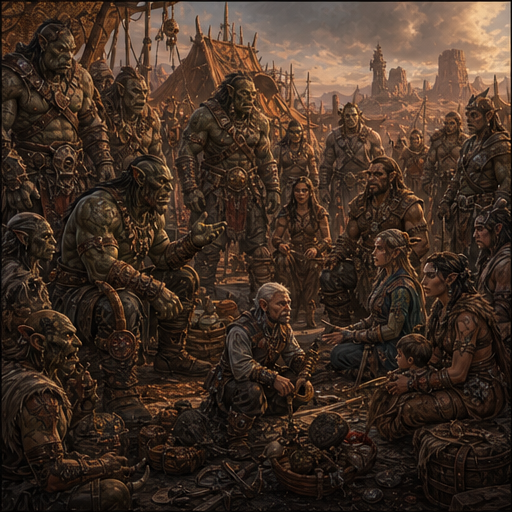
Orcs
The Orcs of the Hordelands have skin colourings ranging from green through to grey and black skin, usually with black hair and dark eyes. They are similar in height to most men, but generally much broader and stronger.
Goblinoids
While not recognised as part of the seven tribes, there are groups of both Goblins and Ogres who have joined them, both in their armies, and within their cities.
Humans
Humans within the Southern Horde-lands are usually either captured slaves, or descendents of the barbarian tribes who have lived here for hundreds of years. All of these tribes have now sworn allegiance to the seven tribes in Port Kheldar, and send tribute each summer. Punishments are severe if this is not done.
Gnomes
The peaceful gnomes from the North likely never wished conflict with the Horde, but when Krunsh saw the war machines and heavy armour of the people of Port Kheldar, he knew he needed the gnomes to build it. After razing the first two Gnome cities which refused to surrender, the remaining settlements quickly yielded. Today they are mostly slaves building the machines of war, or living within what remains of their settlements in poverty, trying to scavenge the necessary tribute each year.
Cities
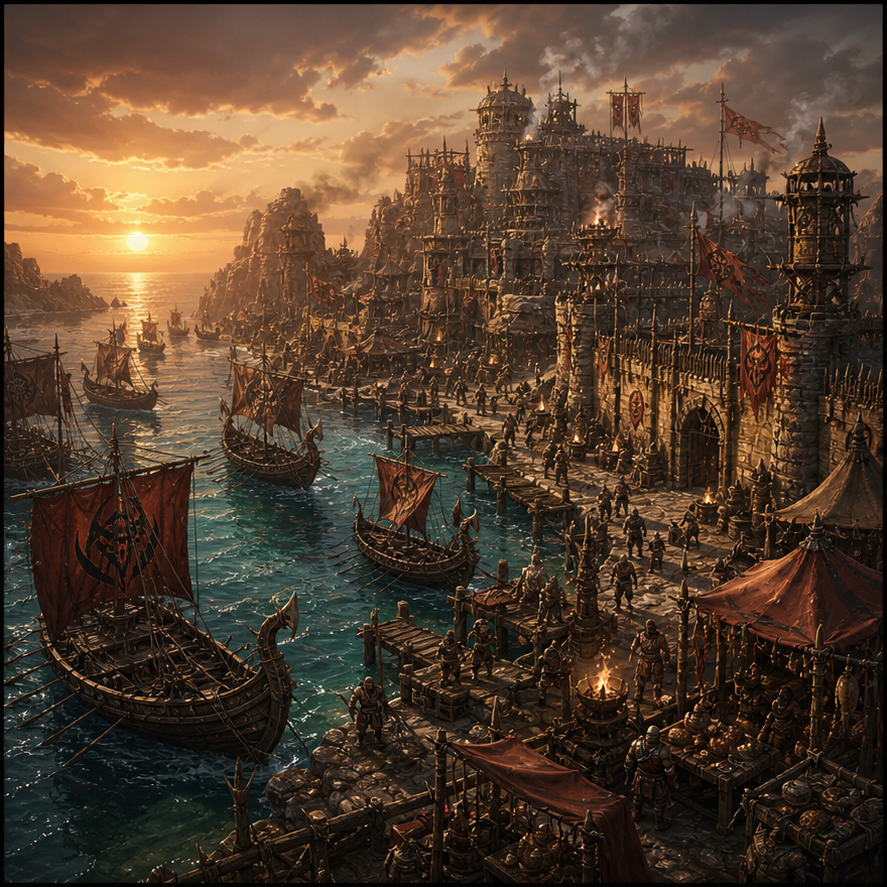
Port Kheldar
The high-walled city of Kheldar is both an impressive Port, and a massive military fortress. Its walls still carry scars from when the seven tribes smashed and conquered the city, and many of the damaged buildings were replaced with Orc fashioned buildings. This creates a strange blend of smooth walls and towers mixed with spiked monstrosities and tributes to the crude Orc pantheon.
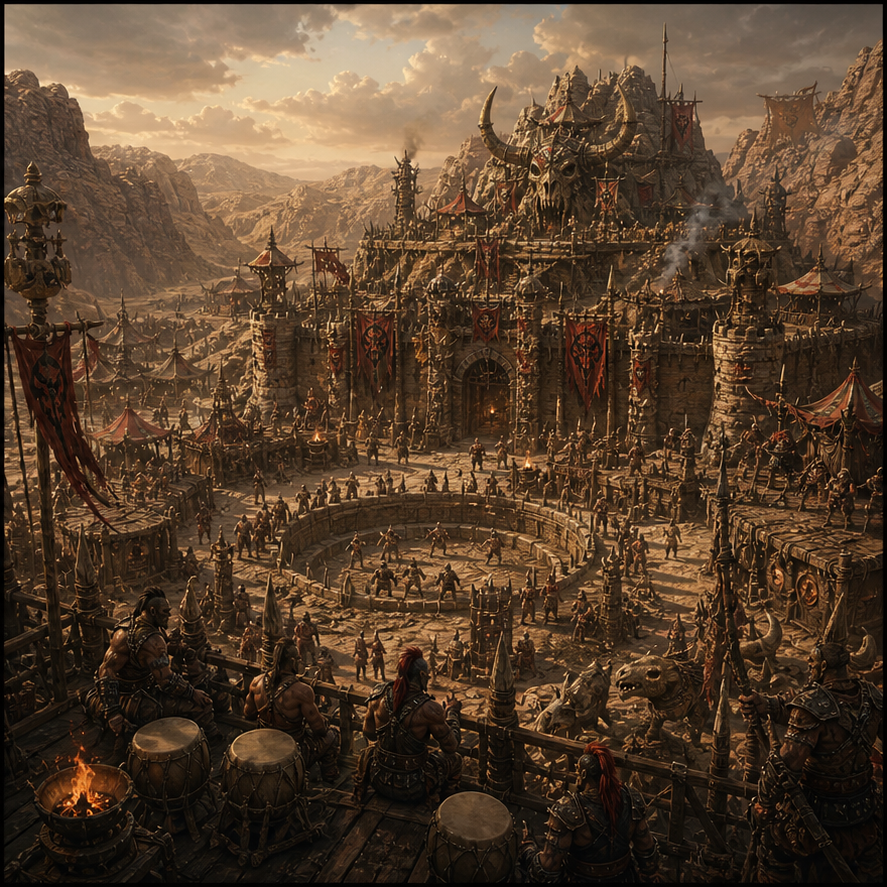
Krunsh
Built as a tribute to their great King, Krunsh has a great Clan Hall which is built into a massive statue to their Leader in the centre of the city, and it is flanked by the statues of his two generals. There is also a central corridor of water to allow visitors to the hall to wash and cool down as they approach the great hall. Treated as holy ground, it is not allowed for any member of the seven tribes to spill the blood of another member within the city, and as such all heated negotiations between the tribes is handled here.
Organisations and Suggested Characters
The Horde
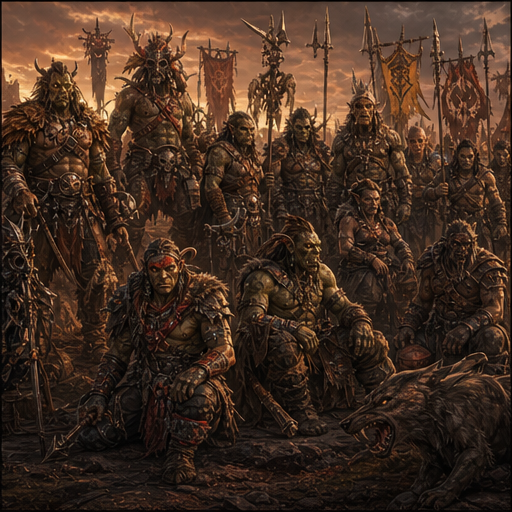
This area takes its name from the massive Hordes of Orcs, humans, goblins and a myriad of other races that periodically pour through the Razors and sail through the Rip to unleash death and destruction on their neighbours. The most recent of these successfully pillaged Longhorn and even sacked Steiner before being narrowly defeated at Davin. Much in the way of loot and slaves is taken during these attacks.
The Seven Tribes
The seven tribes initially united by Krunsh now have an elevated position above that of all other races living within their lands. While other tribes of orcs, goblins, humans and ogres have “joined” the seven, only the seven may rule, and generally there is a lot of racism and prejudice suffered by the others. Each of the seven has a seat on the War Council which rules over the empire, and elects the IlKrunsh (Son of Krunsh) whenever there is a raid or attack planned.
The Seven Tribes
Ranks
- Ruk’Tar (Aspiring Warrior - Lvl 2)No fixed level listed
- Gron’Khal (Tribal Warrior - Lvl 5)No fixed level listed
- Varok’Shun (War Captain - Lvl 8)No fixed level listed
- KrunshNo fixed level listed
The Blood-Axes
The original tribe of Krunsh, the Blood-Axes are responsible for calling the most Raids and Horde attacks. They love to dye their armour blood-red. Once a weapon is drawn in anger it must draw blood, and most will spill blood on their axe prior to going into battle.
Ironborne
The largest and strongest Orcs, the Ironborne are the one tribe that makes little use of horses. In combat they relish the close quarters of melee combat, where their heavy suits of metal armour and their immense strength can do the most damage. They dye their armour black and use white sigils.
Red Moons
Traditionally from the north, it is the Red Moons that control the trade routes to the north and control the Gnomish settlements. They are the richest of the clans, and make the heaviest use of Gnomish weapons, including the most repeater crossbows. They wear yellow or red tabards over their armour, and prefer brightly coloured sigils and adornments.
Fenris Pack
The most feral and savage of the seven tribes, the Fenris Pack contains the largest numbers of berserkers and even a few beast riders, who go into battle on both large lizards, and the winged pteradactyls.. Those that even wear armour will tend for green colourings, and most adorn themselves with totems from both animals and nature.
Skull-Splitters
The skull splitters revel in blood and gore. Their warriors nearly always wield weapons designed to inflict the most bloody and terrible wounds, such as large two-handed swords and axes, or devious and vicious knives. They wear white tabards or robes to better show the blood of their opponents.
Disciples of Ishtar
The most fervently religious of all the tribes, the Disciples revere all aspects of Ishtar, beauty, love and of course combat. Their ranks include by far the largest number of paladins and templars, and also have more Channellers head north than any other clan. Because of this they also have strong relations with the Seekers of Sy. They wear blue with White sigils.
Dark Suns
The original horsemen clan, the Dark Suns were the most powerful tribe up until Krunsh defeated their Lord, and brought them into the seven tribes. Their horse archers and cavalry have become the standard that the other tribes aspire too with their mounted units. They wear white tabards with a black sun adorned on it.
The Urukai
Veterans of the many battles, the Urukai are the fighting elite of the seven tribes. Uniquely, the Urukai take a vow of allegiance to the Urukai and to Krunsh, foregoing any allegiance to their tribe. In this way the Urukai serve the empire, rather than their tribe, and it is not uncommon for them to intercede if they feel the War Council has “lost their way”. The Urukai will also recruit from outside the seven tribes, so it is possible to find other Orcs or even humans or goblins within their ranks.
Ranks
- Gron’Khar (Tribal Warrior - Lvl 6)No fixed level listed
- Varok’Shar (War Captain - Lvl 10)No fixed level listed
Other Tribes
Other tribes of humans, goblins, ogres and trolls also form part of the Southern Hordelands, but they have a lot less influence. If they wish the glory of being in the Horde battles with the other seven tribes, most have adapted to being mounted or just keeping somewhat up with the horses (Trolls). The trolls are watched closely as they love to eat horseflesh.
Regional Life
Relations
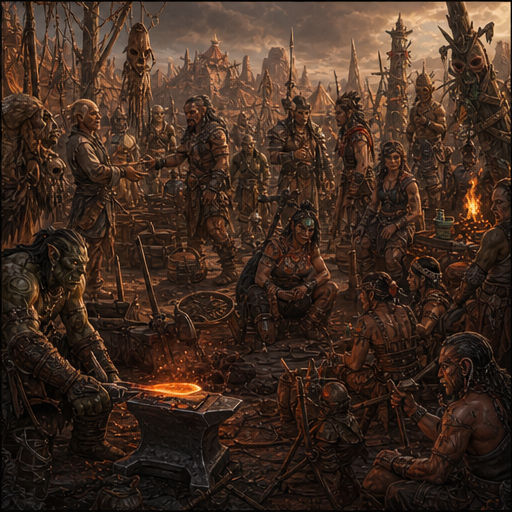
The Southern Hordelands have excellent relations with Ice-Wind Loch and the Blood-lands, which they helped capture and turn into an Orc controlled nation. They have strained relations with their northern neighbours over how the last Horde attack ended.
Clothing
Simple tunics and pants are common, as most Orcs prefer ease of movement. However, wearing clothes captured in a raid or battle is also well regarded. Well made boots are particularly valued
Women
Almost unique within Orc culture, women have equal rights, and are both allowed and expected to fight. Many have risen within the ranks, although none have yet been IlKrunsh, they have sat on the War Council.
Cities
Key settlements: Port Kheldar, Krunsh.
Trade
The seven tribes are not the best at trade. They do barter between tribes and sometimes with the other cultures they meet, but mostly a tribesmen of the Seven Tribes likely just tries to take what he wants. They do trade with the North and with the minotaurs of Ice-Wind Loch in a limited capacity.
Exports: Horses, spoils of raids they have no use for (such as Art objects).
Imports: Weapons and armour (Northern Hordelands), herbs and medicines.
Arms
The Horde will wield nearly any weapon, but their horseman favour swords, bows and crossbows. They make excellent use of bows, cavalry and spearmen when on the battlefield. While light hides and leathers are the most common armours, the gnome slaves have allowed the Horde to accumulate a large number of much heavier suits for their elite troops. Their crossbows are also of gnome manufacture, including some repeater crossbows.
Language
The main language is Krunish (known as Hordespeak to non-Horde) but leaders and scouts are also taught Common and/or the language of their neighbours. Few can read or write however. Most histories and lore are recounted through song or by the Lore-Keepers, an order established by Krunsh to record the glories of the Seven Tribes.
Religion and Magick
All of the Orc gods find worship here, but as with most Orcs, Gruumsh and Ishtar take precedence. It is customary to find priests within most military units inspiring the troops to deeds of greatness. There are relatively few channellers within the Orcs of the South, as most with any aptitude for this either meet an untimely death (many Orcs see it as a Taint) or go north to learn from the Seekers of Sy.
Legendary Chieftain Krunsh defeats the last of the Seven Tribes, and unites the Southern Hordelands
Southern Hordelands Lore Points
IKrunsh
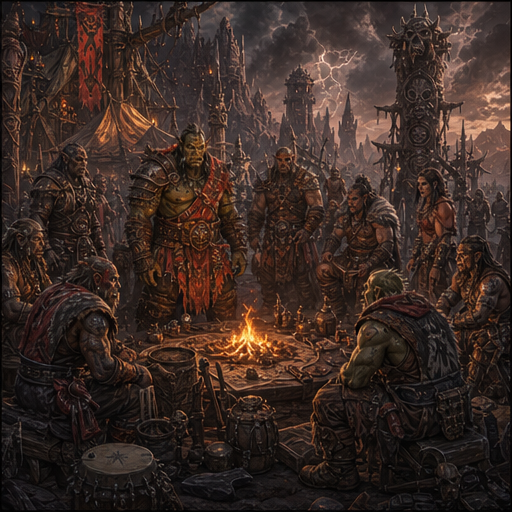
Named for the legendary Krunsh himself, The IlKrunsh is a position taken through Trial by Combat between the current IlKrunsh and one of the War Council. If the IlKrunsh dies by other means, the Council chooses two of its members to fight to be the new IlKrunsh. The current IlKrunsh is a Red Moon named Garluk Flamekin, an Orc with bright red hair and beard. He is a thinker and avoided the worst of the last two Horde attacks when they turned bad. He sees how the North benefited from each of the Horde attacks and aims to be much smarter than his predecessors.
War Council
Made up of the leaders of all seven tribes (who have the Title of Krunsh), including the IlKrunsh, the War Council decides important matters which impact three tribes or more. Any of the War Council can challenge the IlKrunsh for leadership in a Trial of Combat, and within the tribe any War-Leader can challenge for the position on the War Council. As such, the age of the Council is usually younger than most other regions, and closer to prime fighting age.