Overview
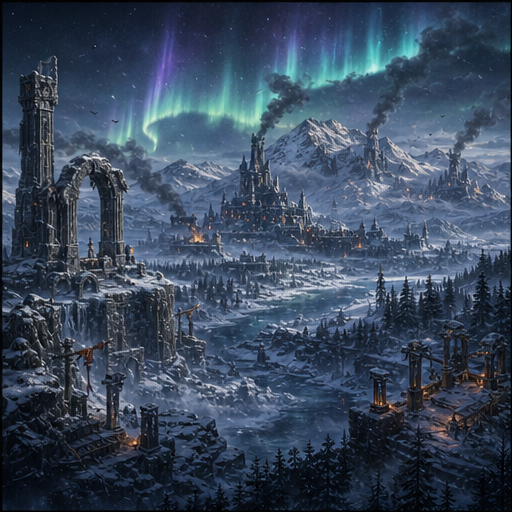
A strange combination of barbarism and mysticism, these lands are ruled by the entity known only as SY. While the natives of the land are largely barbarians, SY has built large cities of his own, and conquered others, creating a mix of races and cultures within his control. Their forces have been part of three united horde attacks, but other than these, the people of the north are more likely to attack each other than their neighbours. It is almost as if SY keeps his minions attacking each other, either to regulate their power or influence, or perhaps for his own amusement.
History
Ruled by the mysterious and allegedly immortal SY, the history of this land is shrouded in secrecy. There is evidence of a sizeable empire from before, and Krusha is proof of their accomplishments, but its people have since been assimilated, and its records have been destroyed. It is unknown what defeated them, only that it happened more than 200 years ago, and maybe as far back as 350 years ago. None of their neighbours are particularly good at writing things down, so their histories are not always reliable for events so far back.
What is known is they participated in the three ‘Horde attacks’ which terrified their western neighbours so much, the Hordelands remains the name this region is known by to all but those who live here. The first Horde attack was 80 years ago, and the most successful, defeating Ice-Wind Loch and the Bloodlands, before spilling across the northern part of the Korellian Plains and destroying every city they came across up to and including the site of what is now Davin. They razed the city where Mari-Kye now stands before the horde broke up. The North forces wanted to consolidate and keep all that they had won. The South wanted to conquer the Dwarves of the Bloodstones and take all their mineral wealth. Their forces fractured, and a force of Bloodstone Dwarves and an army lead by Clan Thunder Hammer of Cthrag Merlo defeated the main host outside the walls of Forge. The Northern forces, under the command of Sy, instead fortified the area now known as the Bloodlands. This was fortuitous as the remnants of the south retreated here, and the Horde held it.
The second Horde attack 40 years ago involved the North, but they were less of a participant than the South or the Minotaurs of Ice-Wind loch. They provided magickal assistance but didn’t lose many forces when the Horde foolishly rode through the Dying Lands. That force lost much of their number to curse, illness and drowning, and then clans started fighting clans. The force that survived the swamps was defeated easily at Bellefort by a combined force of Drasnians and Faylenians, but the Northern losses were tiny.
The most recent Horde attack again picked up forces from the Blood-Lands and Ice-Wind Loch. It sacked Steiner and Longhorn before being stopped and defeated at the walls of Davin. There were almost no northern hordelands bodies amongst the dead however, and rumours of a rift between them and the Blood-lands suggests there was a falling out over something. The Seekers will not speak of it, but rumours say that they stole someone or something (or both) from the Blood-Lands while the Blood-Lands army was marching south.
At the end of the Horde campaign, as has happened several times before, SY took on a younger form again. This has led a very quiet few to question if this really is the same SY, or a usurper, but that kind of questioning is best done quietly, as SY’s retains a firm hold on power, and his Seekers will find anyone dissenting too strongly.
Common Races
Orcs
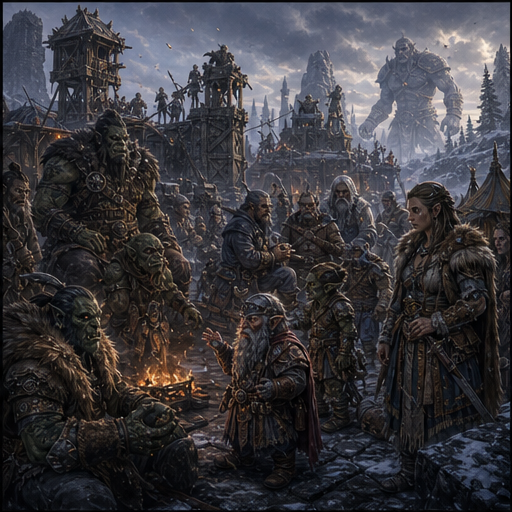
The Orcs of the north tend towards a dark Grey colour rather than Black, although some are paler, with almost white skin colourings. Dark colourings of eyes and hair are common, although the paler Orcs may have lighter colourings. Beards are common as a sign of experience.
Goblinoids
As numerous as the Orcs, the Goblins originated from the Uktar Woods, and appear to have been amongst the first races to join SY. Many of the Seekers are goblin, and many of their strange War Machines are actually of goblin manufacture (not Gnomish as most people suspect).
Humans
Those native to these lands tend to be shorter than normal, but sturdy and stocky. Most are simple barbarians, but increasing numbers are flocking to the cities, lured by promises of fame and fortune.
Gnomes
There are quite a few gnomes in the north, some as refugees, some as slaves. Many gnomes who fled their homes to the south have become craftsmen for SY, and a few have even become Seekers. The craftsmen predominantly build temples to SY, and equip the Seekers with their weapons and armour.
A troll of the Gnoven HilGiant-Kin
Living in the Gnoven Hills, which is the borderlands between North and South, the Giant-Kin include tribes of Trolls, Giants and Ogres. They have built several towns as well, but these often do not last long before they are destroyed by rival tribes or armies from the North of South. The trolls are usually the most primitive, but their speed and savagery will often make up for it.
A troll of the Gnoven Hills
Cities
Krusha
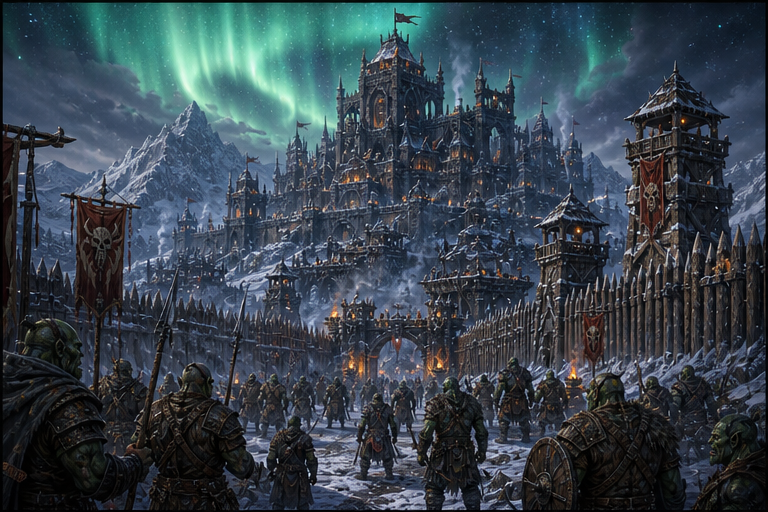
Believed to be the capital of the Old Empire, Krusha is a quite large city nestled into the cliffs, with a massive Stone Keep looking down over the city and its Port. The only approach is a thin winding road making it almost impossible to take, and it is unknown how SY and his barbarian allies conquered it originally. Traitors from within is strongly suspected.
Uktar
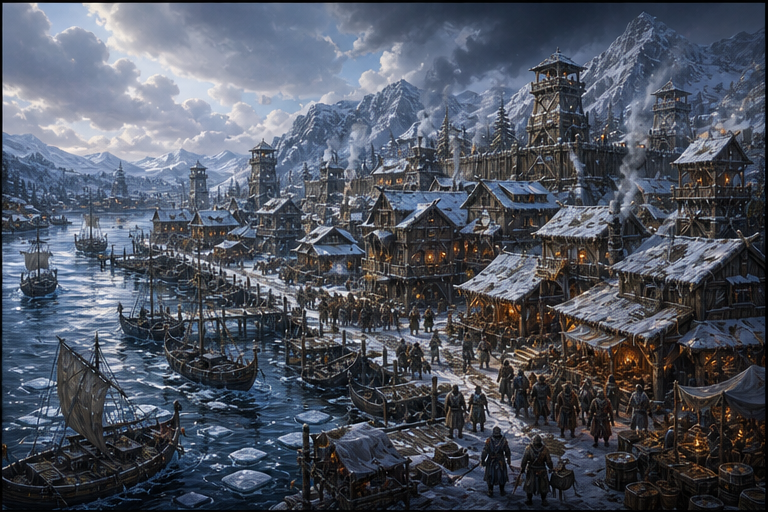
The traditional homeland of the Goblins, Uktar and the forest around it are home to some very wild beasts, including both spiders and the spider-men. Both of these are strong allies of the Goblins, as are the big Worgs they ride into battle. The city proper is mostly wood, but it is walled. However, many of the goblins live in the wilds that surround the city. Goblins make excellent use of traps, and the Forest itself is a nightmare for those not aware of the markings to call out where the traps are. It also said some tribes change the markings for amusement.
Northpoint Tower While Krusha is the Capital, it is believed that SY spends much of his time at Northpoint Tower. The Tower itself is large, and made of black crystal, but it is in the centre of a large walled city. The lower sections form a compound around the Tower which houses and trains the Seekers.
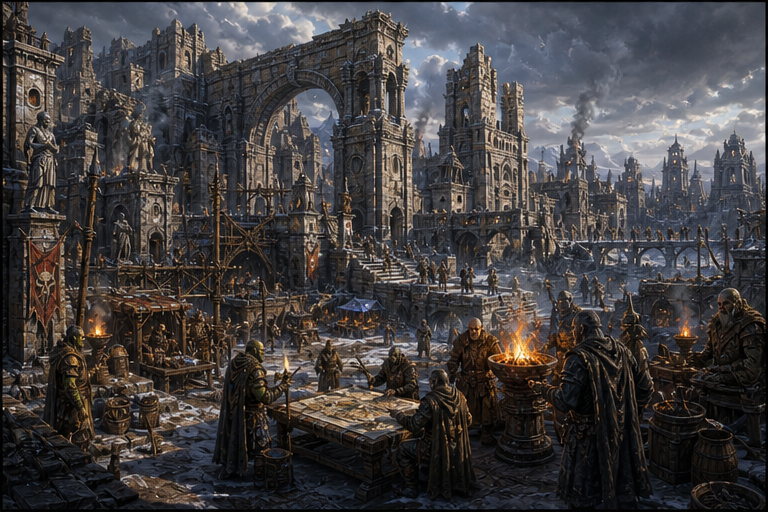
Harket
The location where the “Treaty of Unity” was first signed between SY and Krunsh, Harket has become a monument to both cultures, with shrines and statues to both great leaders.
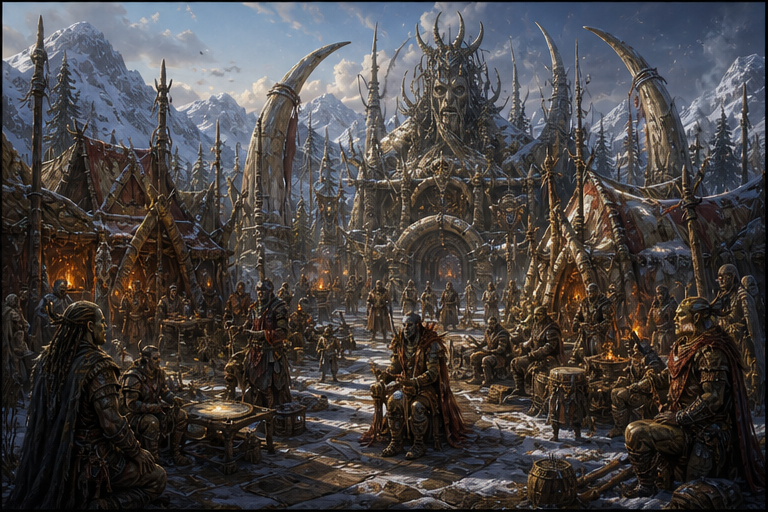
Malaka’jin
The settlement of the Troll King, Grolmok, this town is growing and Grolmok wants to use it to unite the Troll people and indeed any tribe who wishes to join him. The city itself resembles that of more sophisticated races, with a stronghold on the highest hilltop, and defensive walls. It makes excellent use of the natural world, including natural boulders and hill-lines as part of its defences.
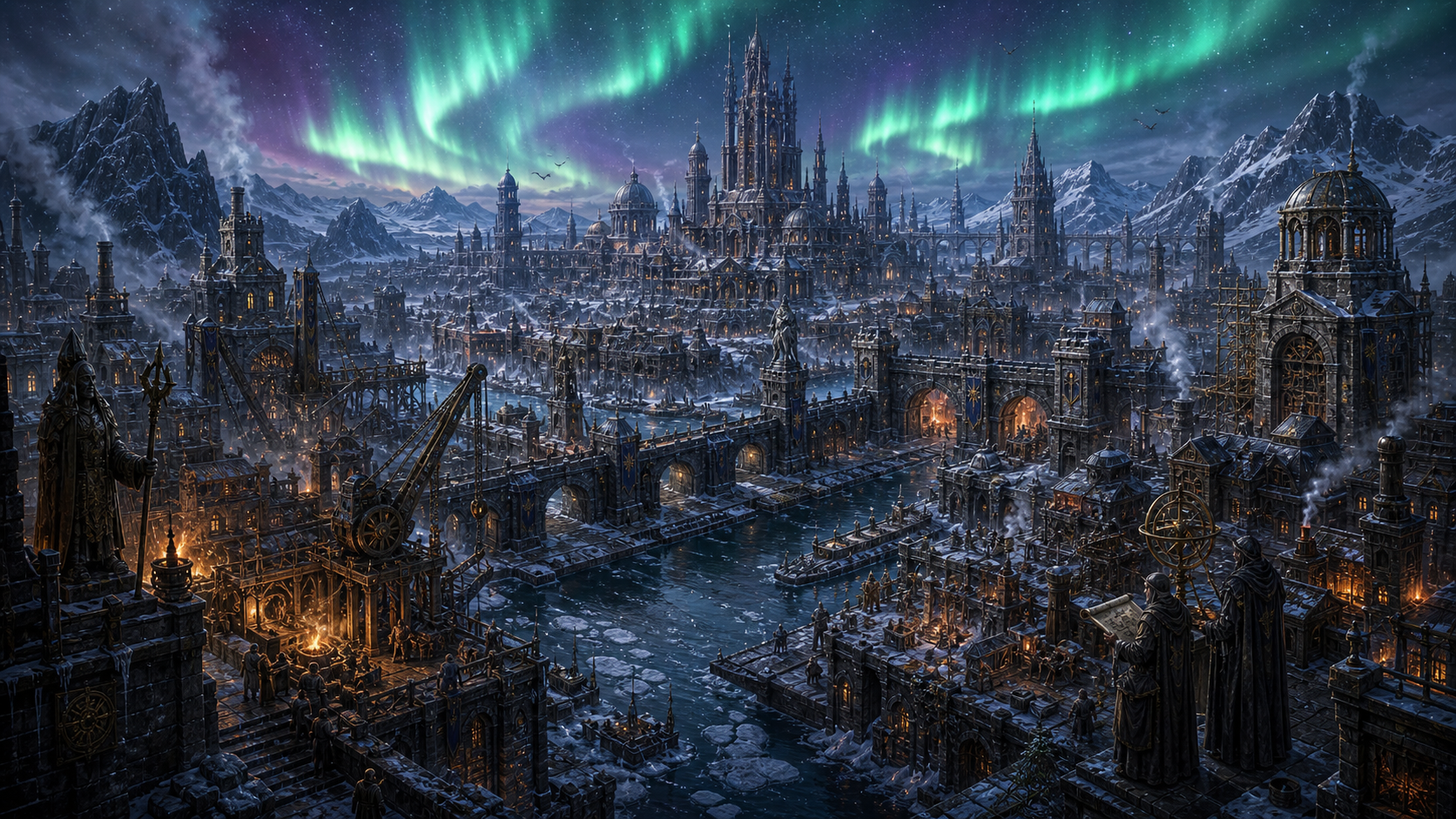
Bael Mekar
The newly finished Ice Fortress of the Frost Giant King, Thundar Hammerfrost, Bael Mekar is a sprawling hillside fortress carved directly into the heart of a towering, ice-covered hill. It has a magickal gate of Solid Ice that is claimed to be impenetrable, and a grand central hall illuminated by ever-burning ice torches. Several Seekers have died in Bael Mekar, but Thundar has been able to convince people it was an accident, so far. Things might escalate if any more meet their demise in his stronghold.
Organisations and Suggested Characters
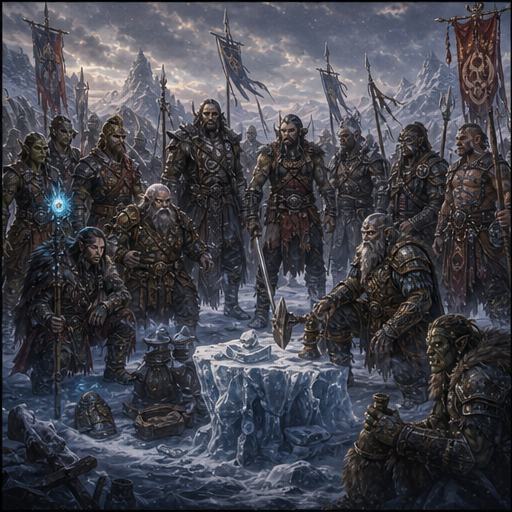
The Seekers
The Seekers are responsible for the accumulation of magickal knowledge, training all magick users within the empire, as well as being the eyes, ears and hands of SY himself. Race is no barrier to being a Seeker, only a natural talent in magick, and willingness to take an Oath to SY. Their white robes with the eye symbol of SY are well known all across the Hordelands. They are generally above the law of anything other than another Seeker.
Ranks
- InitiateLevel 0 guideline
- AcolyteLevel 2 guideline
- SeekerLevel 4 guideline
- InquisitorLevel 8 guideline
- True SeekerNo fixed level listed
- Lord SeekerNo fixed level listed
The Northern Legion
Recognising that the tribal ways of his people do not always result in the best troops for mass battles, SY implemented a Northern Legion, drawing mostly from Krusha. This unit has considerably more discipline than the rest of the barbarians, and fights in much more organised formations. Members of the Legion are nearly always fighters or clerics.
Ranks
- Conscript/RecruitLevel 0 guideline
- SoldierLevel 2 guideline
- SergeantLevel 4 guideline
- OfficerLevel 7 guideline
- CaptainNo fixed level listed
- LegionmasterNo fixed level listed
Northern Barbarians
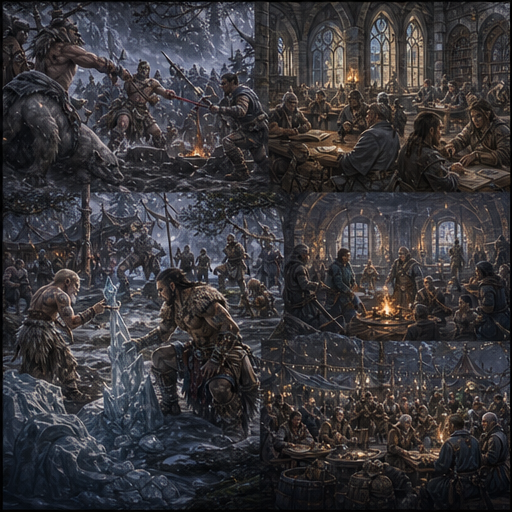
Savage warriors, the barbarians of the north consist of tribes of humans, orcs and goblins. While some ride horses, by far the majority fight on foot, making up for training and discipline with ferocity and courage. The tribes fight each other constantly, and even attack the larger cities from time to time. Most of the tribe will be fighters or rangers, although clerics and shamans are also common. Noteworthy customs of the northern tribes include:
Winter Festival
Held at the Winter Solstice, the festival brings together all the tribes with large bonfires, storytelling and feasting. The Seekers also use these festivals to help find those with casting potential.
Ice-Carving
Many tribes, but particularly the Giants, make beautiful sculptures from Ice, sometimes decorative, and sometimes practical, such as defenses.
Tattoos
Many tribal warriors mark significant events in their lives with tattoos, allowing their life story to be told in the tattoos on their bodies.
Beast-slaying Challenge
Held during the Winter Festival, brave warriors head into the wilds to hunt a powerful beast. The most dangerous beast slayed wins. The Seekers often gather beasts in the area in preparation for this event.
Shamanic Rituals
Shamans have long been part of tribal society, performing rituals to appease the spirits or offering visions of the future, or the Gods will. SY has tried to end these traditions, but some tribes still hold true to it, and will defend their Shamans from the Seekers.
Trolls
Seers believe this is where Trolls originated from. At some point they were corrupted by magick and now many of the trolls encountered are born for the purpose of hunting magick users. The Trolls of the Gnoven Hills are not like that, but they possess a supernatural ability to heal wounds which tends to make their warriors fearless. Trolls are simple and instinctive creatures, but some (usually the kind to be characters) are much smarter than that. Grolmok is actively recruiting trolls to help him unify the Troll clans.
Engineers
SY’s willingness to educate his people has resulted in a significant growth in the amount of engineers in his empire. He also has two different philosophies of engineering to choose from: the relatively precise and considered gnomish approach, OR the chaotic and un-considered approach of the goblins.
Regional Life
Relations
The Northern Hordelands have strong relations with both their Horde neighbours to the Sorth and the minotaurs of Ice-Wind Loch. It is when the forces of these 3 empires unite that they pose the greatest threat to their neighbours. Things are more strained with the Bloodlands as they want what was stolen returned, and SY has insisted they haven’t taken anything.
Clothing
With the barbarians most people wear hides and leathers from the animals of the area, although wearing items looted from others is common amongst the barbarians. Finer clothing is common amongst the cities, with fur lined cloaks and robes.
Women
Women are protected from the harshness of battle, but otherwise have almost equal rights. While both genders may become Seekers, there is actually a preference for Priestesses within this order.
Cities
Key settlements: Krusha, Uktar, Harket, Malaka’jin, Bael Mekar.
Trade
SY utilises the abundant resources of the north, and has established strong trade with his neighbours, ensuring the most powerful economy in his area.
Arms
The Barbarians use the traditional weapons of axes and hammers, spears and short bows. The more civilised cityfolk used curved sabres and scimitars, and also make excellent use of bows. While light hides and leathers are the most common armours for the barbarians, the city folk use brigandine for basic troops, and up to Lamellor for heavier troops.
Language
The main language is Krunish (known as Hordespeak to non-Horde) but most also speak Common. Seekers are taught a special language known as SY but which is in fact ancient Kemplar (few have ever seen both to know this however). Within both the Seekers and the cities the ability to read is quite common.
Religion and Magick
Religion is a strange thing as SY is essentially worshipped as a God, yet worship to both human and Orc gods remains common as well. The Seekers encourage all to worship SY, but other than banning all other shrines from the main cities, seem content to allow the dual worship to remain. There is only one Magick order, the Seekers of SY, who combine the role of mage and priest within their group. The Seekers occasionally exchange information with the Colleges of Magick, but it is rare.
Northern Hordelands Lore Points
SY
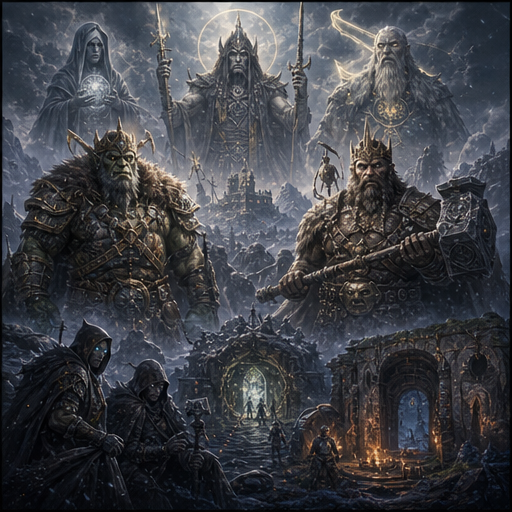
It is not clear when SY first came into power, as he has gone to great effort to erase history from before this time. But given it was at least 200 years ago, most people believe SY is more of a title than an actual person. However, the Seekers of SY worship him as a God, and believe him to be immortal. He is known to be a great Mage, and perhaps one of the greatest caster’s in Driax. He wants his people to attain knowledge and goes to great lengths to find gifted individuals and educate them. But he also does not want rivals, and any that appear tend to die in strange accidents, or from their own rivals in really surprising circumstances.
The Old Empire
It was long thought that SY lead a force of barbarian Orcs to overthrow a civilised human empire, but it would now seem that it was the other way around. While little is known of the Old Empire, it would appear they were more advanced and civilised than any other Orc controlled empire. Why their culture has been erased and hidden is unknown, but the towers, aqueducts and massive bridges are testament to an impressive civilisation.
The Chosen Trinity
Since SY’s most recent transformation into a young verile man, he is now nearly always seen with his two advisers, the young acolyte Ma’at, and the leader of the Seekers, Inga. Ma’at is always dutifully behind him, and many assume she may one day be SY’s Queen. Inga is a mysterious man. Undoubted very smart, particularly in all matters Arcane, but Inga was never actually a Seeker. He appeared from nowhere and was very quickly made head of the Seekers. Inga is particularly adept at finding any threat to SY and dealing with it in spectacular fashion.
King Grolmok the Unifier
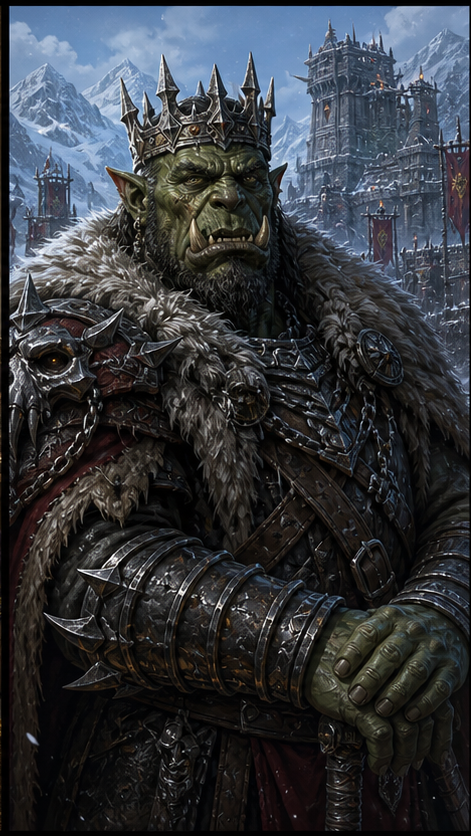
Grolmok is a towering and formidable troll with deep green skin, heavily scarred from numerous battles. His eyes are a piercing yellow, conveying both intelligence and a fearsome resolve. He has united several tribes under his banner through a combination of diplomacy and brute force. His reputation for surprising wisdom and strategic acumen is growing, and he has a vision of a united Troll kingdom that may well not include SY. He is assisted by a well regarded troll mystic, Vrasha, who is likely an ex-Seeker, but now claims to have a had a vision from the Gods of Grolmok as a great King.
King Thundar Hammerfist
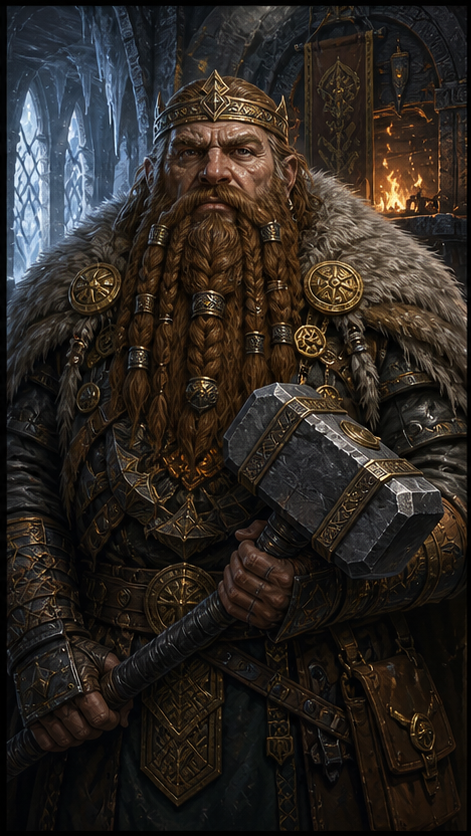
A fearsome Frost Giant, famous for his immense strength and battle prowess. He has pale blue skin, icy white hair, and piercing blue eyes. He nearly always wears a mixture of hides and chainmail, adorned with the trophies of his kills. When he meets new people, he likes to wears trophies of creatures from that race to intimidate. He does not like Grolmok, but he does agree with the sentiment of uniting his people and possibly one day moving against SY and his Seekers.
The Seekers can do more than just gather informatiExports
metals, precious metals, gemstones and timber. They also export weapons and armour, jewellery, carved goods and religious artifacts.
The Seekers can do more than just gather information
Imports: Horses (Southern Hordelands), herbs and spell components (Ice-Wind Loch), magickal tomes and any information/evidence on the Old Empire.
Universities
The Northern Hordelands people, or at least those lucky enough to live in one of its cities, have access to education including schools and Universities which are amongst the best in Driax. These institutions teach magick (strictly controlled by Seekers), but also subjects like engineering, stonemasonry, advanced smithing, strategy and tactics, and the philosophy of SY.